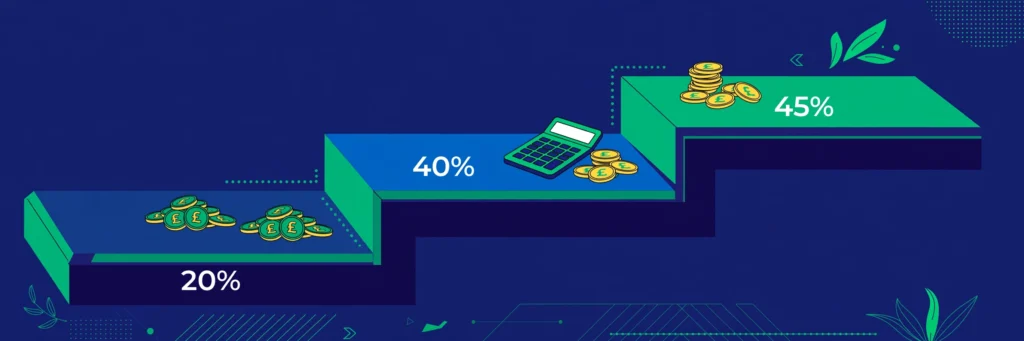
Income tax is the biggest single deduction on most UK payslips, yet surprisingly few people understand how it is actually calculated. The good news is that the system is simpler than it looks once you see the structure. This guide walks through the UK income tax bands for the 2026/27 tax year (6 April 2026 to 5 April 2027) for England, Wales and Northern Ireland, with worked examples at four different salaries.
The loaf of bread analogy: how tax bands really work
Imagine your annual salary as a loaf of bread. HMRC does not tax the whole loaf at one rate. Instead, it slices the loaf, and each slice is taxed at a different rate. The first slice is completely free. The next slice is taxed a little. Only the top slices — the ones above £50,270 — are taxed heavily.
This is the single most misunderstood thing about UK income tax. If you earn £55,000, you are a “higher rate taxpayer”, but you do not pay 40% on £55,000. You pay 0% on the first slice, 20% on the middle slice, and 40% only on the small top slice above £50,270. Keep this picture in mind and everything below will make sense.
The 2026/27 tax bands at a glance
| Band | Income range | Tax rate |
|---|---|---|
| Personal allowance | £0 – £12,570 | 0% |
| Basic rate | £12,571 – £50,270 | 20% |
| Higher rate | £50,271 – £125,140 | 40% |
| Additional rate | Over £125,140 | 45% |
The personal allowance of £12,570 is the amount you can earn before paying any income tax at all. It has been frozen at this level for several years. Above the allowance, the basic rate of 20% applies up to £50,270, then 40% up to £125,140, and 45% on anything above that.
The personal allowance: your tax-free slice
Think of the personal allowance like the free sample at a market stall — the first £12,570 of your earnings each year is yours, untouched. If you earn £25,000, you only pay tax on £12,430 of it. The first £12,570 never enters the calculation.
There is one important exception. If you earn more than £100,000, the personal allowance starts to shrink: you lose £1 of allowance for every £2 you earn above £100,000. By £125,140 it has disappeared entirely. We will come back to this in the £100,000 trap section below, because it creates one of the harshest effective tax rates in the system.
Worked example 1: £25,000 salary
Priya earns £25,000 a year. Slicing her loaf:
- First £12,570: £0 tax (personal allowance)
- Remaining £12,430 at 20%: £2,486
Total income tax: £2,486 for the year, about £207 a month. Her effective tax rate is just 9.9% — less than half the 20% “basic rate”, because nearly half her pay sits in the tax-free slice.
Worked example 2: £35,000 salary
Dan earns £35,000 a year:
- First £12,570: £0 tax
- Remaining £22,430 at 20%: £4,486
Total income tax: £4,486 for the year, about £374 a month. His effective rate is 12.8%. Notice that a £10,000 pay rise from £25,000 cost him only £2,000 more in tax — the extra pay was taxed at exactly 20%, because all of it fell inside the basic rate slice.
Worked example 3: £60,000 salary
Aisha earns £60,000 a year and is now a higher rate taxpayer. But remember the loaf:
- First £12,570: £0 tax
- Next £37,700 (£12,571 to £50,270) at 20%: £7,540
- Remaining £9,730 (£50,271 to £60,000) at 40%: £3,892
Total income tax: £11,432 for the year, about £953 a month. Her effective rate is 19.1% — even though she is in the 40% band, most of her income is still taxed at 20% or 0%. Only the top £9,730 slice feels the 40% rate.
The £100,000 trap: the 60% marginal rate
Here is where the system bites. Between £100,000 and £125,140, two things happen at once: you pay 40% tax on each extra pound, and you lose £1 of personal allowance for every £2 earned. Losing allowance means income that used to be tax-free becomes taxable at 20% — which works out like an extra 20% tax on that pound.
Analogy: imagine climbing a hill where someone keeps adding weights to your backpack the higher you go. Between £100,000 and £125,140, every extra £1 you earn effectively costs you 60p. It is the highest marginal rate in the UK system — higher even than the 45% additional rate.
Worked example 4: £110,000 salary
Tom earns £110,000 a year. First, his personal allowance shrinks: £12,570 minus half of the £10,000 above £100,000, leaving £7,570.
- First £7,570: £0 tax (reduced personal allowance)
- Next £37,700 at 20%: £7,540
- Remaining £64,730 at 40%: £25,892
Total income tax: £33,432 for the year. His effective rate is 30.4%, but every pound of a pay rise inside the £100,000–£125,140 window is effectively taxed at 60%.
What about Scotland?
Scottish taxpayers pay income tax under a different system with more bands (including 19%, 21% and 42% rates). The figures in this article apply to England, Wales and Northern Ireland.
A note on the Autumn Budget
The Chancellor’s Autumn Budget on 28 October 2026 could change these rates and thresholds — check back after Budget day, and try our free take-home pay calculator for figures based on the latest confirmed rates.
Frequently asked questions
Do I pay 40% tax on my whole salary if I earn over £50,270?
No. Only the slice of income above £50,270 is taxed at 40%. Everything below is taxed at 20% or 0%, exactly as the worked examples above show.
What is the personal allowance for 2026/27?
£12,570. It is the amount you can earn tax-free, and it stays the same unless your income exceeds £100,000, when it starts to taper away.
Why is my effective tax rate lower than my tax band?
Because the band rate only applies to the top slice of your income. Your effective rate blends the 0%, 20% and (if applicable) 40% slices together, so it is always lower than your highest band.
What is the 60% tax trap?
Between £100,000 and £125,140, the personal allowance tapers away at the same time as 40% tax applies, creating an effective 60% marginal rate — the highest in the UK system.
When does the 2026/27 tax year run?
From 6 April 2026 to 5 April 2027. UK tax years always start on 6 April, a quirk dating back to the calendar change of 1752.
